Brand
The End of Immutable Branding: Why Static Logos Cannot Survive in a Fluid Economy
For the better part of a century, the central dogma of corporate identity was “consistency.”
The logic was absolute: A logo is a stamp. It must look identical on a skyscraper, a business card, and a television screen. Any deviation was considered a dilution of Brand Equity.
But in the era of algorithmic complexity, this rigidity has become a liability.
We are operating in a hyper-connected, data-rich ecosystem where context changes in milliseconds. A static symbol, frozen in time and form, is incapable of communicating the nuances of a modern B2B enterprise. It is a monolog in a dialogue-driven world.
The market is shifting toward Dynamic Identity Systems.
This is not merely an aesthetic trend; it is a shift in Information Theory. A static logo carries zero bits of new information after the first viewing. A dynamic identity, however, acts as a living container for data, mood, and context. It transforms the brand from a passive object into an active participant.
But how do we engineer chaos without losing recognition?
01The Mechanics of Polymorphic Branding
The transition from “Logo” to “System” requires a fundamental change in how we view design assets. We are no longer designing a final image; we are designing the rules that generate the image.
Here is the operational framework for implementing a Generative Identity strategy:
1. From Constants to Variables (Parametric Design)
Traditional branding relies on constants: one hex code, one shape, one typeface. Dynamic branding relies on variables.
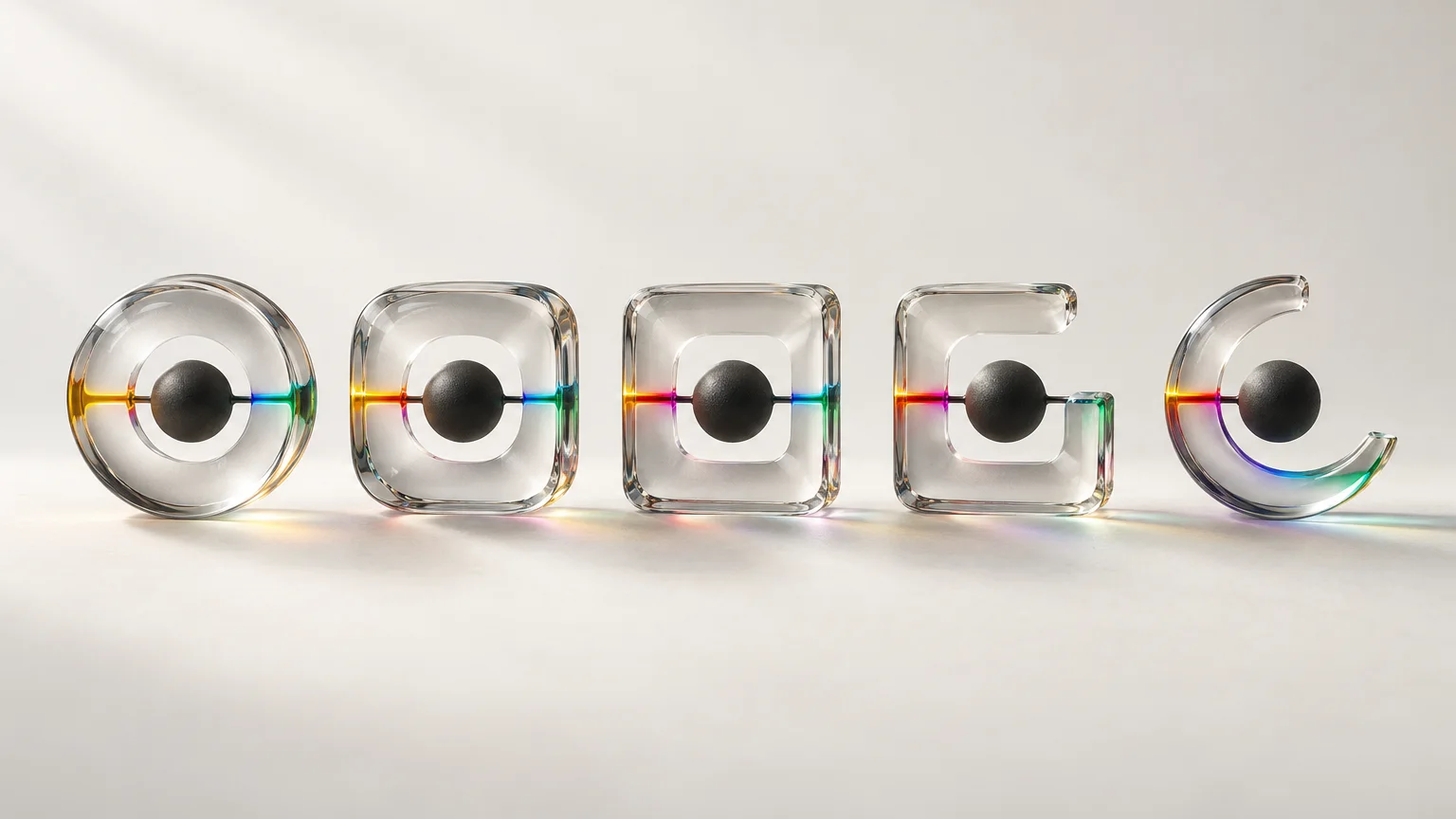
By utilizing Parametric Design, we define a set of constraints (the “DNA” of the brand) while allowing specific parameters—such as color, volume, or density—to fluctuate.
The Science: This creates a “family resemblance” rather than identical twins. The audience recognizes the underlying mathematical logic of the brand, even if the visual output is unique every time.
2. Data as a Design Driver
A truly dynamic identity is data-responsive. It inputs external telemetry and outputs visual change.
The Application: Consider a logistics company whose brand pattern changes density based on real-time global shipping volume. Or a Fintech firm whose color temperature adjusts according to market volatility indices. This turns the brand identity into a Data Visualization tool, providing immediate, subconscious utility to the viewer. It signals: We are connected to the pulse of the industry.
3. The Context-Aware Interface
In User Experience (UX) design, context is king. A brand mark sitting on a dense spreadsheet should behave differently than one on a marketing landing page.
The Strategy: Implement responsive behaviors. The identity should strip away complexity in low-bandwidth or high-cognitive-load environments (like a complex SaaS dashboard) and expand into expressiveness in high-engagement zones (like an onboarding screen). This creates a “Cognitive Ergonomic” fit.
4. Co-Creation and User Agency
The most advanced tier of dynamic branding allows the user to influence the output.
By using WebGL or generative coding, brands can allow users to customize their own version of the corporate identity within the pre-set algorithm.
The ROI: This triggers the IKEA Effect—a cognitive bias where users place a disproportionately high value on products they partially created themselves. It deepens brand affinity through participation.
02Editor’s Insight: The Psychological shift from Authority to Empathy
There is a deeper, less discussed layer to this strategy.
Static branding is historically rooted in Authority. It says: “I am this way, and I will not change for you.” It represents the institution as an unshakeable monolith.
Dynamic branding, conversely, is rooted in Empathy and Agility.
When a brand identity adapts—changing its form to fit a mobile screen, reacting to the user’s time of day, or visualizing data relevant to the client—it signals a high degree of organizational neuroplasticity.
It subtly communicates that the company is listening, processing, and reacting. In the B2B sector, where the primary fear of buyers is “vendor stagnation,” a living, breathing identity system is a powerful heuristic for innovation.
It proves you are not just selling technology; you are embodied by it.
03The Strategic Discourse
Transitioning to a dynamic identity is not without risk. It requires letting go of the “Pixel-Perfect” control that Brand Managers have guarded for decades.
It raises a critical governance question:
Where do you draw the line between “Flexibility” and “Inconsistency”?
For the CMOs and Creative Directors here: Have you experimented with generative or variable assets? Or does the fear of diluting brand recognition keep you anchored to static assets?
I am eager to read your perspectives on the balance between control and autonomy in design systems. Let’s discuss in the comments.